Your studio's looks portfolio,
always on screen
The bride comes in for the trial and, instead of scrolling her phone, sees your real looks on screen — natural bridal, evening glam, editorial. She picks hers before she sits at the station. You push the new look and the next course dates from your phone, between clients.
First screen free forever · No card · Offline 48 h
Trial included · self-makeup class Sat.
What you put on screen
from day one
Templates ready for the freelance artist and the studio with an academy. No design, no learning curve.
Looks portfolio by occasion
Natural bridal, evening glam, editorial, party, fantasy. The client sees your real work on loop and picks the style without describing it. It's what closes the most bridal bookings: the decision is made by looking.
Prices and packs
BRIDAL MAKEUP £90 (with trial) · EVENT £45 · PHOTOSHOOT £60 · GROUP (bride + guests). You change it from your phone and the screen updates in 2-3 seconds, no reprinting the card on the station.
Courses and workshops with dates
Saturday's self-makeup workshop, the pro course, the seats left. It's your second income line and the screen fills it without you announcing it one by one.
Products, before/afters and your Instagram
The brushes and foundation you recommend on sale, the before-and-afters and your Instagram with a QR to your profile on loop. You sell product and turn passers-by into followers.
The plan your
studio needs
A solo artist with one screen in the studio: Starter €9/mo. A studio with a portfolio screen in the waiting area plus a prices screen at the station: Pro €19/mo (3 screens, the popular one). A studio with an academy and several stations: Business €59/mo. A multi-site chain: Network €199/mo. All with a 14-day trial, no card.
No card · Cancel anytime · See all plans
Where the screen goes
in the makeup studio
A makeup artist sells their portfolio and their training. Each screen works one of the two income streams.
Waiting area
The portfolio of looks by occasion: natural bridal, evening glam, editorial, party, fantasy. The client sees your work while she waits and reaches the chair knowing what she wants; the portfolio is what closes the highest-value service.
Station
The prices and packages: bridal makeup with trial, event, photoshoot, group (mother of the bride, bridesmaids). With the price per service clear, the client decides on the full package instead of the single makeup.
Training area
Saturday's self-makeup workshop, the professional course and the places left. Training is a makeup artist's second income; advertising it in the studio fills the courses with the clients who already trust you.
Retail area
The brushes and the foundation you recommend for sale, the before-and-afters and your Instagram on loop. The client who has just seen herself made up wants the product you used; the screen sells it at that exact moment.
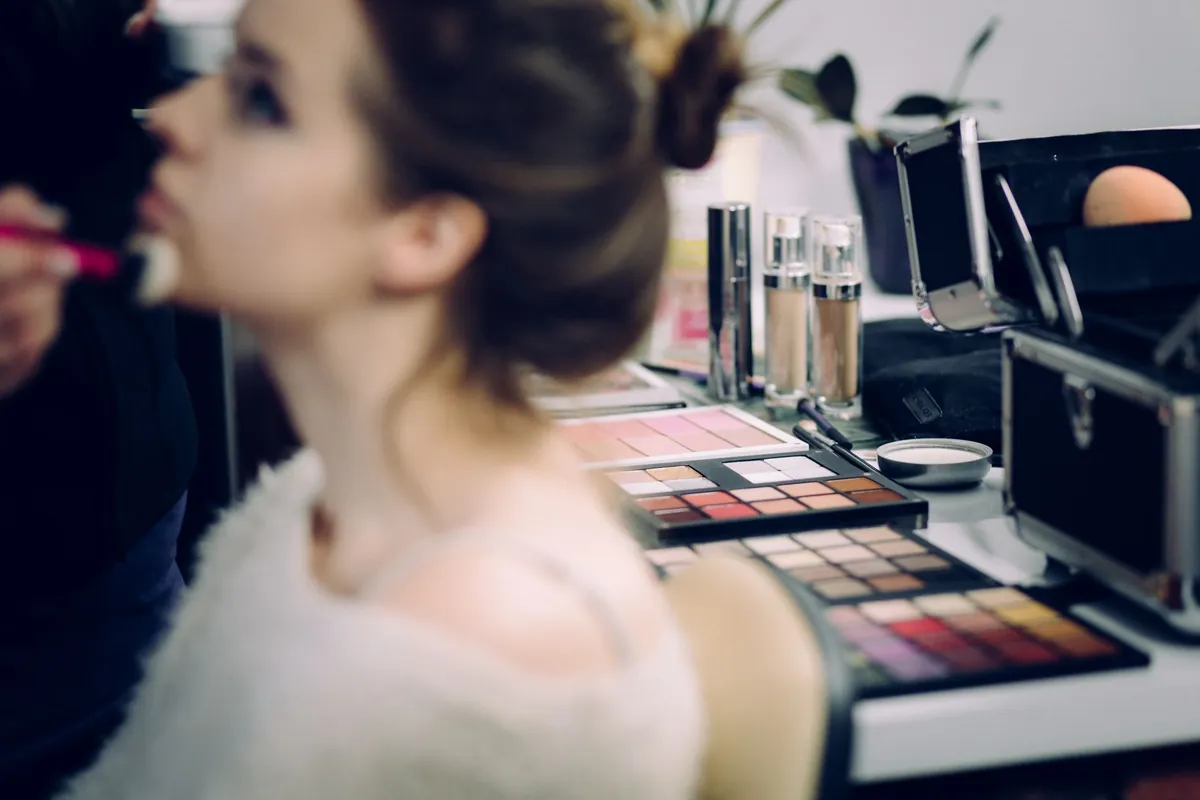
The portfolio closes the bride,
the training diversifies
A makeup artist lives on the highest-value service — the bride — and on diversifying with training and product. The screen works all three.
The portfolio closes the bridal makeup, the highest-value service. The client chooses an artist by the work she sees, and bridal makeup — with its trial included — is the highest-ticket service and the one most decided on trust. A portfolio of looks by occasion in the waiting area shows your style and closes that booking far better than a book flicked through hurriedly on a phone.
Training is the second income, and it fills with those who already trust you. The self-makeup workshops and the professional course diversify a makeup artist's income beyond the services. Advertising them in the studio, with the places left, fills them with the clients who already know you and want to learn from you: the easiest audience you have to convert, and the screen puts it in front of them.
The trial is six months before the wedding and the makeup is for one morning in June. Between those two dates sits everything that goes wrong: she changes her mind about the dress, the light in the church is not the light in your studio, and a heatwave turns a matte base into a decision made in the wrong season. A screen carrying your own work by month — this is a July bride at four in the afternoon, this is a January one indoors — is the only way to have that conversation without it sounding like an excuse later. Bridal is booked on trust and remembered in photographs that never get thrown away.
To be straight with you: we do not integrate natively with your calendar or your Instagram. If your feed is at a URL, the screen can show it; if not, you upload the portfolio and the dates by hand. Bookings stay on your channel; Digisini is the screen layer that shows your work, fills your courses and sells your cosmetics.
A portfolio proves you can do the work
it proves nothing about the two things that go wrong
Photographs sell the look, and this page already says so. What they cannot show is whether the premises are registered for the treatments offered, and whether a patch test happened before a tint. Those are the two things that cause the incidents in this trade, and they are also the two the client has no way of judging from a picture.
Semi-permanent work sits in a different category from makeup, and the client rarely knows it. Microblading and similar treatments break the skin, which brings them under local-authority registration for the premises and the practitioner, with an inspection behind it. Plenty of studios hold that registration and never mention it — it lives in a frame in the back room. Put on the wall, it is the one claim a client can verify independently, in a trade where every other claim is a photograph that could have come from anywhere.
The patch test is the other one, and it is worth stating as a rule of the house rather than as caution. Lash and brow tints are where the serious reactions happen, and a test is expected forty-eight hours ahead — by good practice and, in the ordinary case, by whoever insures you. A client who is told this at the point of booking hears an inconvenience; a client who reads it on the wall while waiting hears a studio that has thought about her. It is the same sentence, and only the second version survives the moment when she wants it done today.
And saying it plainly does something the portfolio cannot: it separates you from the person working out of a kitchen. That is who you are actually competing with on price, and no photograph settles that comparison — good pictures are available to anyone. Registration, testing and a stated way of working are the parts that cannot be copied off social media, and they are exactly the parts that never make it onto the wall because they feel like paperwork rather than craft.
One caution about what belongs beside those lines: keep the before-and-afters of skin treatments away from them. A brow tint result is a look; a corrective or a skin-improvement claim is a different kind of statement about outcomes, and mixing the two on one wall turns a safety message into a sales one. The order that works is unglamorous and reliable — portfolio first, prices second, how you work third — and the third part is the one that gets read by the client who is deciding whether to trust the first two.
To be straight with you: we display what you upload and we verify nothing. What requires registration in your area, and what your insurer expects before a tint, is a matter for your local authority and your policy — the point here is only that these are the two things a photograph cannot prove, and that they are almost never written where a client can read them.
Common questions
from makeup artists
Your first screen,
live this afternoon.
First screen free forever. No card. No installers. Offline 48 h.
Start free →14-day trial on paid plans, no card · Cancel anytime
Take the button via email
We'll send a 1-click link to create your account whenever you want. No password, no card, no commitment. Your first screen FREE forever.
No spam. Just the link — you decide when to come in.