The WOD on screen,
not on a half-wiped whiteboard
The 7am class arrives and coach Dan is still scrawling the WOD in marker. Half the room warms up with no idea what's on. Instead of a smudged whiteboard, the screen shows today's WOD, the timer and the leaderboard with yesterday's PRs. The drop-in trying it out sees the beginner on-ramp and signs up. You change the WOD from your phone before opening.
First screen free forever · No card · Offline 48 h
21-15-9 thrusters + pull-ups · box record 2:48
What you put on screen
from day one
Ready-made templates for the neighbourhood box and the multi-room facility with a weightlifting area.
Today's WOD and the week's programming
The WOD broken into its parts — warm-up, strength block, metcon — with the timer and the full week's programming. When coach Sarah updates Tuesday's session, she pushes it from her phone and the screen refreshes in 2-3 seconds. No more half-erased whiteboard and "wait, what are we doing today?"
Leaderboard, PRs and benchmarks
The day's leaderboard, personal records and box benchmarks — Fran, Murph, Cindy. Healthy competition gets the 7am regulars pushing harder and brings them back next week. It's what turns a class into a community that keeps showing up.
On-ramp, memberships and challenges
The beginner on-ramp programme, membership options and upcoming challenges — the Open, the box throwdown. The intimidated drop-in who walks in not knowing anyone sees there is a clear entry point for beginners and signs up. You turn curiosity into a paying member.
Community: coaches, events and reviews
Box photos at full capacity, coach bios, upcoming competitions and meetups, and your real reviews. CrossFit sells on community — the screen shows it. The first-time visitor wants to be part of that before they leave.
The plan your
box needs
Small box with 1 screen on the training floor: Starter €9/mo. Box with a floor screen plus a reception screen: Pro €19/mo (3 screens, the most popular). Larger box with multiple rooms and a weightlifting area: Business €59/mo. Multi-site box chain: Network €199/mo. All with a 14-day trial, no card.
No card · Cancel anytime · See all plans
Where the screen goes
in the box
A box lives on the WOD and the community, not the machines. Each screen feeds one of the two.
Training floor
The day's WOD with its parts (warm-up, strength, metcon), the timer and the week's programming. No more half-wiped whiteboard: everyone sees the WOD, the scaling and the times clearly, and the class flows without the coach repeating it ten times.
Leaderboard wall
The day's leaderboard, the personal records and the box benchmarks (Fran, Murph, Cindy, Grace). Seeing a training partner's PR is a healthy nudge; friendly competition is half the reason people keep coming back.
Reception
The on-ramp course, the memberships and the challenges — the Open, the box throwdown. It is where the visitor decides to sign up: showing the on-ramp tells them there is a way in and they will not hit a Fran on day one.
Community area
Photos of the box packed out, the coaches, the comps and meet-ups, and your reviews. Community is a CrossFit box's product; making it visible captures the doubter and retains the regular.
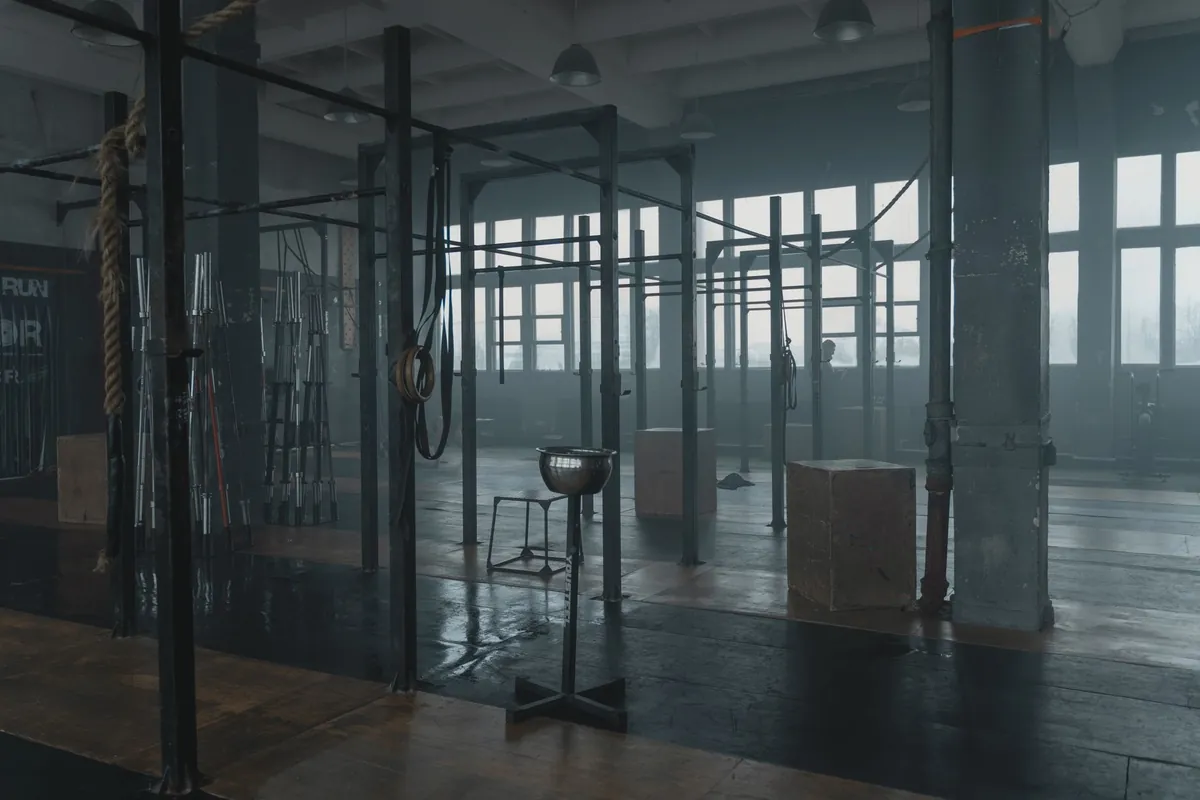
The WOD on screen,
the community on the wall
A CrossFit box does not sell machines, it sells the WOD, the community and measurable progress. The screen works all three at once.
A clear WOD makes the class flow. The whiteboard wiped and rewritten a thousand times is every box's daily grind; on screen, the WOD with its parts, the scaling and the timer are seen by everyone at once. The coach corrects instead of reciting, the class starts on time and nobody asks "how many rounds was that?". A small detail, a big difference day to day.
The leaderboard hooks and retains. Seeing a partner's PR or a benchmark time is the good kind of nudge: friendly competition is half the reason people come back three times a week. Having the records and the day's leaderboard on the wall feeds the measurable progress that is the heart of CrossFit, and measurable progress is what retains.
Community captures the doubter and prevents the drop-out. Nobody stays at a box for the barbells, they stay for the people. Showing the atmosphere — the packed-out photos, the coaches, the meet-ups, the challenges — turns the doubter's visit into a sign-up, because they see what they are joining, and reminds the regular why they stayed. The visible on-ramp tells the newbie there is a way in.
To be straight with you: we do not integrate natively with SugarWOD, Wodify or Boxmagic. If your programming is at a web URL, the screen can show it and refresh it; if not, you upload the day's WOD by hand in a minute. Digisini is the screen layer that shows the WOD and brings the community to life, not a box management system.
A public leaderboard motivates the top third
and quietly pushes the bottom third out
It is the first thing most boxes want on a screen, and it works — for the people who are already near the top. For everyone else, seeing their name at the bottom of a wall every week is not motivation, and the ones it costs you are exactly the ones whose membership is most fragile.
The fix is not to drop the leaderboard. It is to change what the number is measured against:
- Show progress, not ranking. «Twelve people beat their own time today» does the same motivational job and includes everyone. It also happens to be true more often than a ranking is interesting.
- Rank within a scaled group, not overall. Comparing an RX time with a scaled one tells nobody anything useful, and it tells the scaled athlete something discouraging that isn't even accurate.
- Rotate what gets celebrated. First pull-up, first six months, most classes this month, back after an injury. Every one of these is a real achievement and none of them is a time.
There is a retention argument underneath this that is easy to check in your own numbers: the members who leave are almost never the strongest ones. They are people in their first six months who decided, usually without saying it, that this room was not for them. Anything on the wall that confirms that decision is expensive, and a ranking is the most efficient way of confirming it.
The same logic applies to the benchmark days. A named benchmark repeated twice a year is one of the few honest ways to show someone that a year of turning up produced something measurable — but only if the comparison shown is with their own previous attempt, which is a display decision and not a programming one.
If you already have a leaderboard up, run one simple test: for a month, show personal-best beats instead of rankings and count how many people mention it. The number of comments goes up, and the people commenting are not the ones who used to be at the top.
Common questions
from coaches and box owners
Your first screen,
live this afternoon.
First screen free forever. No card. No installers. Offline 48 h.
Start free →14-day trial on paid plans, no card · Cancel anytime
Take the button via email
We'll send a 1-click link to create your account whenever you want. No password, no card, no commitment. Your first screen FREE forever.
No spam. Just the link — you decide when to come in.