The 6pm court, empty —
full before dinner
Tuesday at 5pm. Two courts free and nobody knows. Instead of a sign with last year's league, the bar screen shows today's free slots, Saturday's americana with spots left and the club ranking. The member having a drink grabs a racket and books. You free the court from your phone and it advertises itself.
First screen free forever · No card · Offline 48 h
Free today · americana Sat · 2 spots left
What you put on screen
from day one
Ready-made templates for the neighbourhood club with 3 courts and the indoor centre with a shop and restaurant.
Court availability & booking
Today's and the week's free slots, court by court, with a QR to book. The quiet Tuesday afternoons stop being quiet because the member walking past sees an open court and books on the spot. When a court frees up, you push it from your phone and the screen updates in 2-3 seconds.
Americanas, tournaments & ranking
The next americana with spots remaining, the month's tournaments and the internal league table. The ranking stirs the member who's 4th to sign up for Saturday's americana. That's what turns a courts business into a community — and a community fills the weekend.
Coaching, court passes & shop
Coaching sessions, court passes and the racket and gear shop. The member who only came for Thursday's game discovers the coaching for their backhand and the pass that works out cheaper. You lift revenue per member without a salesperson.
Social area, events & reviews
Club photos, after-padel events, the bar menu and your real reviews. Padel gets played in pairs and stays for the atmosphere. The bar screen shows there's a proper club here, not just four courts — and that's what makes members bring friends.
The plan your
club needs
Small club with 1 screen at reception: Starter €9/mo. Club with a reception screen plus a bar or social area screen: Pro €19/mo (3 screens, the most popular). Larger club with several courts, a shop and a restaurant: Business €59/mo. Multi-site club group: Network €199/mo. All with a 14-day trial, no card.
No card · Cancel anytime · See all plans
Where the screen goes
in the padel club
A padel club lives on court occupancy and community. Each screen pushes one of the two.
Reception
The free slots for today and the week, court by court, with a QR to book. An empty court is money lost every hour; showing availability turns the 6pm gap into a last-minute booking.
Bar and social area
The next americano with the places left, the month's tournaments and the in-house league with its ranking. The social events are why people choose a padel club; advertising them fills them and builds the community that retains.
Classes and shop
The coached classes, the court packs and the racket and gear shop. The player who sees the class or the pack on screen gets into a routine, which is what turns the casual into a member.
After-padel area
The photos of the club packed out, the events and the after-padel, the bar menu. Padel is as much sport as social plan; showing the club's life attracts the one looking for somewhere to play and stay.
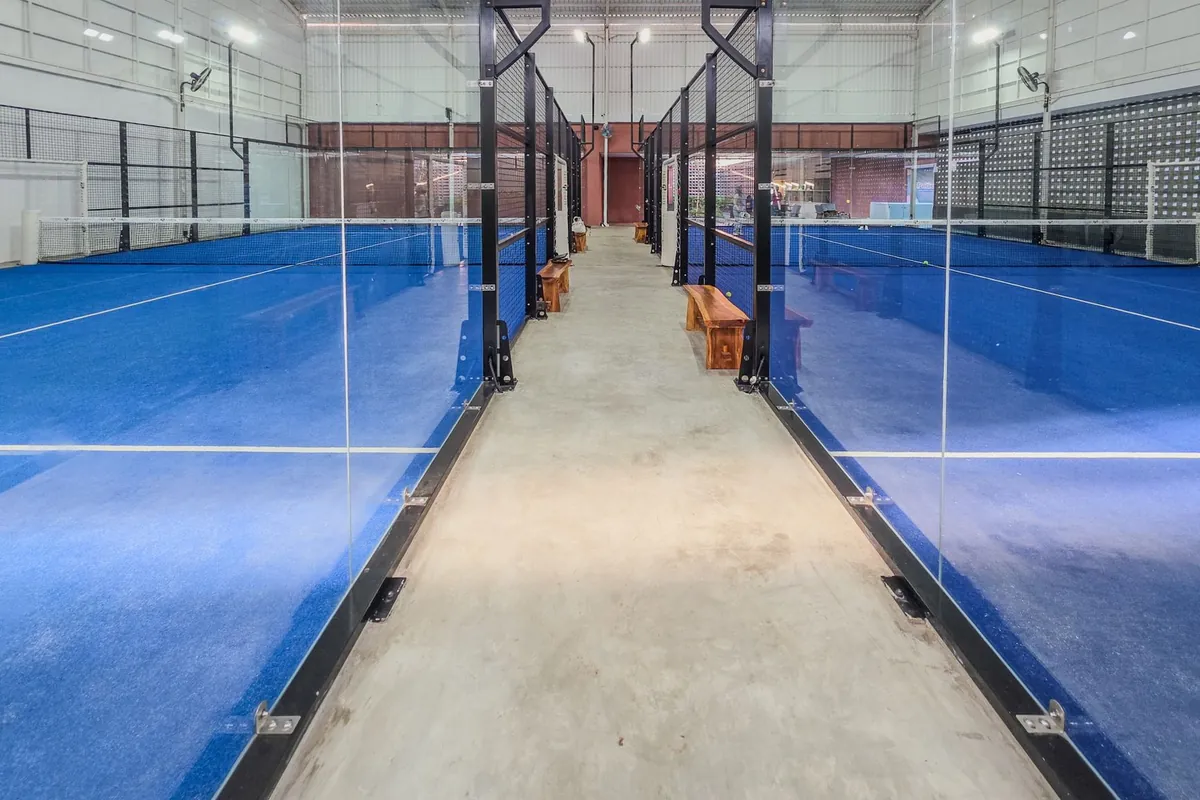
Fill the courts,
and hook with the community
A padel club does not live on the one-off court, it lives on full occupancy, on the americanos and on turning the casual player into a member.
The empty court is money evaporating. Every hour a court sits unbooked is lost income that does not come back. A board with today's free slots — court by court, with the QR to book — rescues last-minute occupancy: the one who sees the 6pm court free grabs it for after work. Showing availability is the most direct way to fill the club.
The americanos and tournaments are the social hook. Padel is played in a group, and the player chooses a club for the atmosphere as much as the courts. Advertising the next americano with the places left, the tournaments and the in-house league with its ranking fills those events and builds the community that keeps people coming back. A club with life retains, and that community cannot be copied.
The classes and packs turn the casual into a member. The player who only books now and then leaves little; the one who signs up for classes or buys a court pack gets into a routine and becomes regular. Showing the coached classes, the court packs and the racket shop on screen drives that conversion in the moment the player is in the club, and gives the books stability between weekend peaks.
To be straight with you: court booking is handled by your software (Playtomic, Matchpoint, Resasports). The screen shows the free courts and who is still short of a fourth; the QR opens the booking system you already use, which we do not replace. Digisini is the screen layer that fills the courts and livens the club's community.
Padel needs four people,
so what your members are short of is not time, it's partners
A club can have courts free and members who want to play, and still have empty slots — because the two never meet. It is the one problem in this sport that no amount of court investment solves, and the one a screen inside the club is unusually well placed to fix.
What makes it worth solving is that the demand already exists and is sitting in the building:
- A visible list of who is looking for a fourth on Thursday converts far better than any promotion, because the people reading it have already decided they want to play.
- Level matters more than availability. «Two intermediates looking for two» works; «anyone welcome» produces one bad match and two people who stop asking. Showing the level is what makes the list get used twice.
- It fills the slots nobody books, which are almost never the ones the club assumes. Weekday mornings sell easily to a retired group once that group knows the others exist.
There is a second, larger consequence for retention, and it is the reason this matters more than an occupancy tactic: people do not leave a club, they leave a group. A member whose regular four breaks up — one moves, one gets injured — stops coming within a month, and no renewal reminder catches that. Anything that helps them find a new group is worth more than a discount.
The same board handles the thing clubs most often do badly, which is connecting the people who came through a beginner course with the people who play socially. Those two groups usually share a building for months without meeting, and the course cohort quietly disappears when the course ends. Making the next step visible — an open session, a fixed beginner slot — is what turns a six-week course into a member.
Count how many of last month's bookings were made by the same handful of organisers. In most clubs it is a very small number of people doing all the arranging, and everything that makes arranging easier scales directly off that.
The court is booked by one person
who then has to collect from three others — and that small friction decides how often they book again
Almost every booking is made by the same person in the group: the one who organises. They pay the whole amount and then spend the week reminding the others. It is a tiny administrative burden, it falls on the same individual every time, and it is one of the quieter reasons a regular group stops being regular.
What clubs can change about it, without changing the price:
- Let each player settle their share directly. Anything that removes the organiser from the middle removes the reason they get tired of organising.
- Show the per-person figure, not the court figure. Twenty-eight pounds for a court reads as expensive; seven each does not. It is the same money and a different decision.
- And make the balance visible to the group, not just the payer. Most people are not avoiding payment, they have simply forgotten which week it was.
The reason this matters more than it sounds is who it lands on: the organiser is the most valuable member you have. They bring three others every week, they fill the awkward hours, and they are the person who notices first when something at the club stops working. Making their week slightly harder is an odd thing to do by accident.
There is a related figure worth knowing: how many of your bookings come from the same handful of names. In most clubs it is a startlingly small group. That concentration is a strength and a risk at once, and it is invisible unless someone counts.
Look at last month's bookings and count the distinct names that made them. If a quarter of your court hours come from five people, those five are your product, and their admin is your problem.
Common questions
from padel club managers
Your first screen,
live this afternoon.
First screen free forever. No card. No installers. Offline 48 h.
Start free →14-day trial on paid plans, no card · Cancel anytime
Take the button via email
We'll send a 1-click link to create your account whenever you want. No password, no card, no commitment. Your first screen FREE forever.
No spam. Just the link — you decide when to come in.