Your pieces, occasions and finance,
on your store screens
Your window still shows the yellowed price tag from last season while the hero piece sits in the cabinet unseen. Inside, the occasion showcase and 0% finance remove the price barrier — customers who came in for a gift leave with the right piece for the moment. Change the featured piece from your phone in seconds.
Free first screen forever · No credit card · Offline 48 h
0% finance over 12 months · free engraving · valuations & repairs
What you show on screen
from day one
Ready-made templates for the independent jeweller and the watch specialist with a street-facing window. Zero design work, zero learning curve.
Window: hero pieces & collection
Your window shows the hero piece and the new collection — not a sun-faded card from three seasons ago. You update the featured item from your phone in seconds: swap in a new arrival, spotlight a limited edition or rotate the seasonal centrepiece without touching the display or calling anyone.
Occasion showcase (engagement, anniversary, gifts)
Inside, the screen guides customers by occasion: engagement rings, anniversary pieces, birthday gifts, Mother's Day, Valentine's Day. Shoppers who came in browsing find the right piece for the moment and leave confident. You raise the average sale without your staff having to push.
0% finance + workshop services
Show your 0% finance offer on screen and remove the price barrier on higher-value pieces. Alongside it, promote your workshop services — repairs, engraving, watch battery replacement and valuations — so customers know you offer the full picture and come back between purchases.
Key dates, loyalty and certificates
Valentine's Day, Christmas, Mother's Day and anniversary campaigns run automatically on the right dates. Your loyalty programme, certificates of authenticity and customer reviews play on the in-store screen, building trust at the moment it matters most and giving existing customers a reason to return.
The plan your
store needs
Single window screen: Starter €9/month. Window + in-store showcase: Pro €19/month (3 screens, most popular). Larger store with multiple zones: Business €59/month. Watch chain or multi-location jewellery group: Network €199/month. All plans include a 14-day trial with no credit card.
No card · Cancel anytime · See all plans
Where the screen goes
in the jewellery store
In a jewellery store people buy emotion and hesitate on the price. Each screen works one of the two, always with restraint.
Window
The hero piece of the week and the new collection, in a considered tone. A jewellery window captures the passer-by and creates desire; no huge prices or sale signs, exclusivity is conveyed with restraint.
Showcase by occasion
The inside screen groups pieces by moment: engagement rings, anniversary watches, gifts, christening. Nobody buys "a piece of jewellery", they buy a moment; guiding by occasion helps the undecided customer find the right piece.
Workshop and services area
The interest-free finance clearly visible, and the workshop services: repairs, engraving, watch battery change, valuation. Finance removes the price barrier, and the workshop brings recurring traffic that then buys.
Till and loyalty
The key dates — Valentine's Day, Christmas, Mother's Day and Father's Day — the certificates of authenticity and loyalty. The year's peak is set up beforehand and switched on at a tap when it lands.
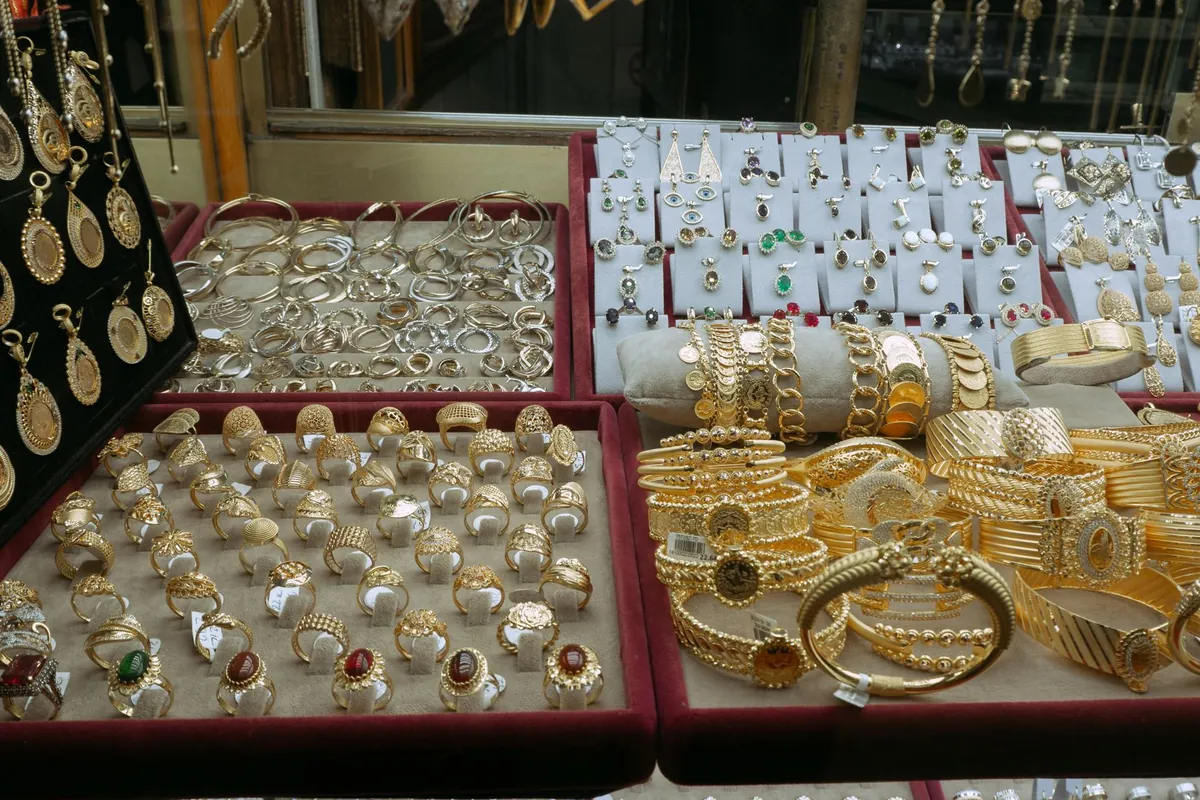
Sell the occasion,
and remove the price barrier
A jewellery store lives on the emotional purchase, on getting past the price barrier and on the key dates. The screen works all three, with the right tone.
The occasion guides the emotional purchase. The customer comes in with a moment in mind — a proposal, an anniversary, a christening — and often does not know what to choose. Grouping the pieces by occasion in the showcase accompanies them to the right piece and raises the ticket, because you offer the piece for their moment instead of leaving them lost before a full case.
Almost nobody is buying it for themselves, and that changes who you are selling to. The person standing in front of the case is usually not the person who will wear the piece. He does not know her size, he is not sure what she already owns, and the one thing he will not do is admit either of those out loud to a stranger. A screen that lays out what suits what — the chain lengths against a neck, what goes with an engagement ring, what a 7 and a 9 actually look like on a hand — lets him work it out on his own, standing there, without a single question. That is the sale that otherwise walks out to "I'll think about it", which in a jewellery shop means "I'll ask her sister".
The workshop is the traffic that then buys. The repair, the engraving, the watch battery change and the valuation bring people into the jewellery store regularly, and whoever comes in for a service often leaves with a piece. Having the workshop services visible on screen makes them known and turns a small repair into the way in to a sale.
To be straight with you: we do not integrate with your jewellery management software or your POS. The screen shows the pieces, the finance and the services you upload, with a restrained tone, and you change it from your phone; the sale and stock stay in your system. Digisini is the screen layer that creates desire and removes the barrier.
Every jeweller must show the dealer's notice
and in most shops it is a faded card nobody has read since it went up
It explains what the marks on a piece mean and which items must carry them. It is on your wall because it has to be — and it happens to be the only thing in the shop that lets a customer check a claim rather than take it on trust, in a trade where absolutely everything else has to be taken on trust.
Read properly, it answers the question every customer is quietly asking: how do I know this is what you say it is. Nobody asks it aloud, because in a jeweller's it sounds like an accusation. So they resolve it the only other way available — by assuming the cheaper shop is the honest one and the expensive one is charging for the carpet. Making the marks legible, with what each one means and where to find it on the piece, turns a compliance poster into the answer to the objection you never get to hear.
The same applies to the words on the tickets, which are the biggest source of quiet disappointment in this trade. Plated, filled, rolled, vermeil, solid: they look like grades of the same thing and they are not, and the customer finds out two years later when the colour goes. Spelling out the difference costs a line each and it does not push people down the range — in practice it pushes them up, because someone who understands what plating is buys the solid one when it is for something that matters.
Then there is the part that keeps a jeweller alive between purchases and that most customers do not know exists: the workshop. Resizing, restringing, a new clasp, a stone reset, a battery, a valuation for insurance. These are small, frequent, high-margin jobs, and they bring in the person who was not going to buy anything today. A shop that lists them is not advertising a service — it is telling people that the ring in their drawer, the one that stopped fitting, is fixable.
And the last one is the least obvious: say what you will not do. Which pieces you cannot work on, what a repair cannot restore, when a clean will change the finish. In a trade where the object usually has more sentimental value than commercial, the shop that sets expectations before touching something is the one people trust with the piece they actually care about — and that piece is where the relationship starts.
To be straight with you: we display what you upload and we assay nothing. What must be hallmarked, and what the notice must say, is set by the assay offices and the applicable rules — the point here is only that this notice is already on your wall, that it is the one verifiable thing in the room, and that it is almost always in a frame nobody looks at.
Common questions
from jewellery stores
Your first screen,
live this afternoon.
Free first screen forever. No credit card. No installers. Offline 48 h.
Start free →14-day trial on paid plans · Cancel anytime
Take the button via email
We'll send a 1-click link to create your account whenever you want. No password, no card, no commitment. Your first screen FREE forever.
No spam. Just the link — you decide when to come in.