Your shop window,
that sells the second pair
The customer comes in for new glasses and waits while you finish the eye test. Instead of a TV showing the news, they see this season's frames, the second pair at -50% and varifocals at £49/month. They leave with the prescription sunglasses they weren't planning to buy. You change it all from your phone.
First screen free forever · No card · Offline 48 h
Varifocals from £49/month · free eye test
What you show on screen
from day one
Templates ready for the high-street opticians and the optometry practice with a testing room.
Offers and range, always current
FRAME + LENSES from £99 · 2ND PAIR -50% · VARIFOCALS from £49/month · PRESCRIPTION SUNGLASSES. Finance for varifocals in plain sight removes the price barrier. When you change an offer, you push it from your phone and the screen updates in 2-3 seconds.
Frame and brand showcase
The collections and the brands you stock, on a loop. The window screen catches the passer-by; the in-store one gets the customer choosing a frame while they wait for the test. It's what lifts the second-pair and premium-range sales the most.
Eye-test reminders and guarantee
Eye test every 1-2 years, varifocal adaptation guarantee, free adjustment and clean. You win back the customer who doesn't return and fill the testing room with appointments, the backbone of the shop's repeat business.
Eye health + hours and reviews
Eye-health tips (blue light, UV protection, kids' glasses), your opening hours and your real reviews. You educate the customer, build trust and justify the premium range without it looking like an advert.
The plan your
shop needs
Small shop with 1 screen: Starter €9/month. Shop with a window screen + an in-store screen by the testing room: Pro €19/month (3 screens, the most popular). Larger shop with several areas and an optometry room: Business €59/month. Multi-site chain: Network €199/month. All with a 14-day trial, no card.
No card · Cancel anytime · See all plans
Where the screen goes
in the opticians
An opticians raises the ticket with the second pair and wins the patient back with the eye test. Each screen works one of the two.
Window
The frame collections and brands on loop, and the hook offer: glasses from £99, second pair half price. The window captures the one comparing opticians, and the second-pair offer gives them the reason to come into yours.
Sales area
The catalogue with varifocals financed monthly, the prescription sunglasses and the lens treatments. Showing the monthly payment, not the total, removes the price barrier on a varifocal, which is the highest-margin sale.
Consulting room
The eye test, the varifocal adaptation guarantee, the fitting and cleaning. The patient sees that the opticians is about eye health, not just selling, and that builds the trust that brings the recommendation.
Waiting area
The eye-health advice — blue-light filter, UV protection, children's glasses — and your opening times. Educating on eye health retains and opens sales like the blue-light filter or the pair of prescription sunglasses.
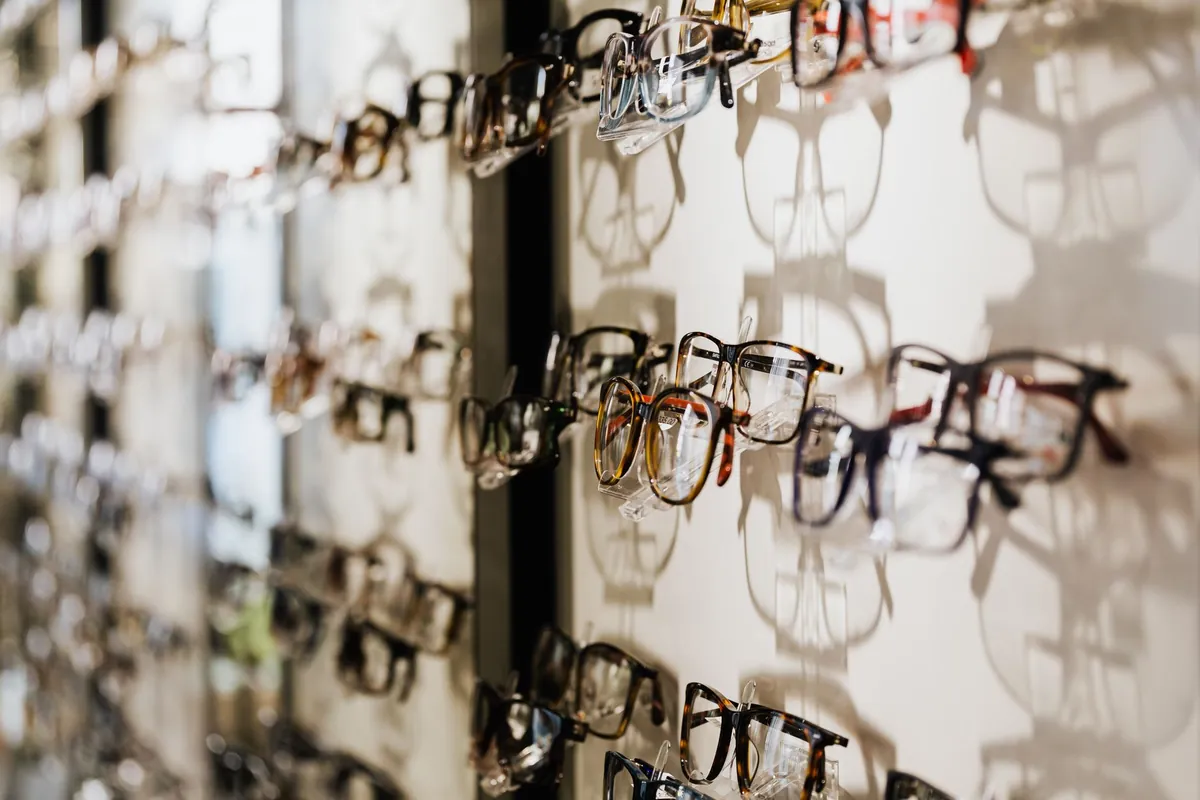
Sell the second pair,
and win the patient back with the eye test
An opticians grows by raising the ticket with the second pair and varifocals, and by winning back the patient due a test. The screen works both.
The second pair is not asked for if it is not seen. The patient who comes for prescription glasses also takes the prescription sunglasses or a spare pair if you show them, but rarely asks off their own bat. The second-pair-half-price offer on screen, well visible, raises the average ticket naturally: same visit, double the sale.
He is not here about his eyes, he is here about his face. The prescription is what forces him through the door; what he actually cares about, and will not say, is not looking worse in them. That is why a frame wall is browsed and a lens explanation is nodded at. Using the wait to show frames on real faces — what a round one does to a square jaw, what happens at the temples — talks to the reason he came, and he reaches the counter with two picked out instead of a prescription in his hand and no idea.
The eye test wins back the patient you already have. The reminder for an eye test every year or two reactivates the patient who drifted away, and is the cheapest way to fill the diary: people who already know you and just needed the nudge. And educating on eye health — blue light, UV, children's glasses — opens sales the patient did not ask for because they did not know they needed them.
To be straight with you: we do not integrate with your practice software (Optix, Acuitas, FLEX). The screen shows the catalogue, the offers and the advice you upload, and you change it from your phone; the management and records stay in your system. Digisini is the screen layer that raises the ticket and wins patients back.
Most people should have their eyes tested every two years
and almost nobody counts — so the visit happens when something goes wrong, not when it is due
The interval is known, the date is calculable from the last test, and the practice already holds both. Yet in most cases nothing happens until the customer notices they are struggling. That gap is not a marketing problem; it is a scheduling one, and it is the difference between a predictable flow of appointments and a diary that fills by accident.
What makes the difference between a reminder that works and one that annoys:
- Timing it to the person, not to the month. A reminder two years after their own last test lands as care. The same message sent to everyone in January lands as advertising.
- Saying what it is for. Not "book an appointment" — that a prescription can change without anything feeling different. Most people believe no symptoms means no need.
- And making the reply trivial. One step. Anything that requires a phone call at a specific hour loses the people who intended to come.
There is a second reason to do this that has nothing to do with sales: a routine test is the only regular health check most adults actually attend. Several conditions show up in it before they show up anywhere else. That is a genuinely good reason to be told, and it changes how the reminder reads.
Worth noticing where the effort is: this is one of the few things in a small business that is entirely predictable. Almost nothing else about a week can be known two years in advance. Leaving that unused, while trying to attract new people who have never walked in, is the harder version of the same job.
Pull the list of tests done two years ago this month. That list is next month's appointments, and it already exists.
Common questions
from opticians
Your first screen,
live this afternoon.
First screen free forever. No card. No installers. Offline 48 h.
Start free →14-day trial on paid plans, no card · Cancel anytime
Take the button via email
We'll send a 1-click link to create your account whenever you want. No password, no card, no commitment. Your first screen FREE forever.
No spam. Just the link — you decide when to come in.