Your shop window
sells at 23:00
Emma, manager of Pebble Boutique in Brighton, swaps the featured product in the digital window from her phone while sipping a coffee. The window screen shows "URBAN BACKPACK · £49 (was £79) · 4 in stock". At 23:00 with the shop closed, it keeps rotating tomorrow's collection catching evening passers-by. No print shop, no agency.
Free first screen forever · No credit card · 5 min on air
TODAY ONLY · 4 IN STOCK
Urban Backpack · £49 (was £79)
What your high street sees
from day one
Window, counter, fitting room, till. Each screen with its own script, all from one panel.
24/7 digital shop window
"URBAN BACKPACK · £49 (was £79) · 4 in stock · Today -30%". Editorial photo + live price + real stock. Stays on after closing to catch evening passers-by.
Look of the day · inspiration
Combine garment + accessory + bag in an editorial composition: "TOTAL SPRING LOOK · dress £79 + sandals £49 + silk scarf £19". Passive cross-sell without the assistant having to suggest.
Flash with countdown
"TODAY ONLY UNTIL 14:00 · -30% on jackets". Large ticking timer, drives FOMO in quiet hours. At 14:01 reverts to normal price on its own. No reprints.
Smart fitting room
Screen inside the fitting room rotating "With this shirt · this tie · these shoes" and seasonal arrivals. Lifts average basket without pushy upsell.
Multi-store + permissions
Global brand campaign from HQ + local deals per store (coat discount London only). Each manager edits only her screen via a limited sub-account.
"Closing early" / out-of-stock override
"CLOSING TODAY AT 18:00 · short-staffed", "LAST UNITS SIZE M", evacuation. One button forces the message across every screen and resumes when you switch it off.
Window €9 · Multi-store
from €59
Local boutique (1 digital window + counter): Starter €9/month. Mid-size shop (window + fitting room + counter with look of the day): Pro €19. Multi-store (3-10 locations with per-manager permissions): Business €59. Chain (10-50 stores, central + local campaigns): Network €199.
No card · Cancel anytime · See all plans
Where the screen goes
in the shop
In retail the window sells at night and the fitting room does the cross-sell. Each screen works a moment of the purchase.
Digital window
The featured piece with an editorial photo, price and stock: "URBAN BACKPACK · £49 (was £79) · 4 in stock · today -30%". The window captures the passer-by at any hour, after closing too, and you change it from your phone with no printed poster.
Inside and inspiration
The outfit of the day: garment + accessory + bag in an editorial composition. The customer who sees the whole look put together takes more than one piece, because you solve the "what do I wear it with?" that stalls the purchase.
Flash with countdown
The flash offer with a timer: "TODAY ONLY UNTIL 2PM · -30% on jackets". The countdown creates real urgency and fills the quiet morning hours, when the shop is empty and the margin to move stock is greatest.
Fitting room
The screen inside the fitting room with the cross-sell: "with this shirt, this tie and these shoes". It is the moment of maximum buying intent — the customer is already trying on — and the best place to suggest the complement without pressure.
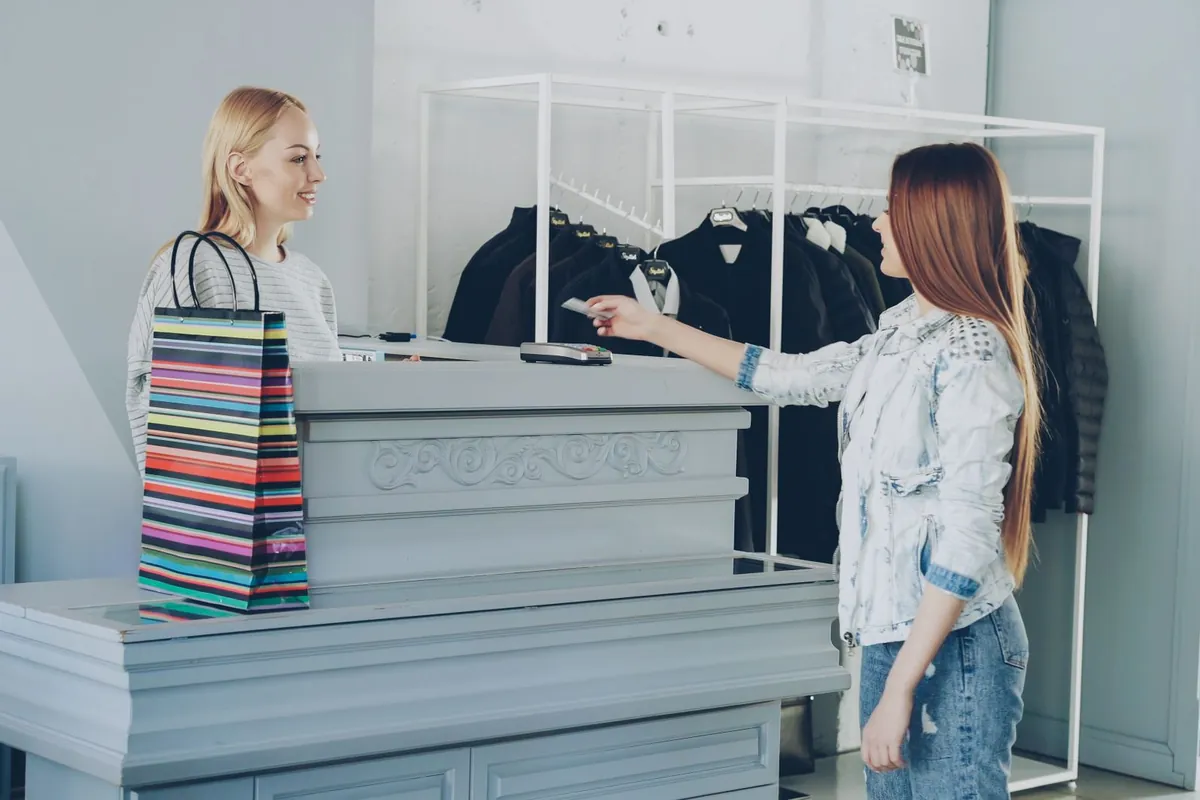
The window sells at 11pm,
the fitting room does the cross-sell
A shop sells beyond opening hours with the digital window and raises the ticket with inspiration and the fitting room. The screen works all three.
The digital window sells when the shop is closed. The evening stroller, the Sunday one, the one coming back from dinner: all pass by outside hours, and a bright digital window with the featured piece, the price and the stock captures that customer for the next day. You change it from your phone in seconds when new stock lands or you launch an offer, with no reprinting or repositioning of signage.
Inspiration and the flash raise the ticket and move stock. The outfit of the day put together solves the "what do I wear it with?" and makes the customer take the set, not the single garment. And the flash with countdown creates the urgency that fills the quiet morning hours and clears the stock you need to move, with the FOMO of the timer doing the work a sale tag does not.
The fitting room is the moment of most intent, and the screen makes the most of it. When the customer is already trying a garment on, they are a step from buying and open to suggestions. A screen in the fitting room proposing the complement — the tie, the shoes, the accessory — does the cross-sell at exactly the right moment, without pressure and without a sales assistant hovering. It is retail's most natural upsell.
To be straight with you: the screen can sync with your e-commerce (Shopify, WooCommerce, Magento) to show real stock, and in multi-store you give permissions so each shop edits only its screen. What we do not do is manage your sale or your inventory: we show what your system already has. The GDPR responsibility for what you display is yours.
The law says eighteen. The policy says twenty-five.
And the sign exists to protect whoever is standing at the till
Asking a thirty-year-old for ID feels rude to do and rude to receive, which is exactly why it gets skipped by whoever is newest and least confident. A policy written on the wall changes what is happening in that moment: the refusal stops being one person's judgement of another person's face and becomes the shop's rule, applied to everybody. That is a smaller thing to say out loud, and a much easier one to say at half past eight on a Saturday.
It matters most for the people you would least want to leave unprotected. A weekend member of staff, three shifts in, facing a group. The wording on the screen behind them is doing half the work before anyone opens their mouth: this is what we ask for, this is what we accept, this applies to everyone. Shops that put it up consistently report the same thing, and it is not about compliance — the arguments simply get shorter, because there is nothing personal left to argue with.
The part that is genuinely easy to let slide is the record. A refusal that nobody wrote down did not happen, as far as anyone reviewing it later is concerned, and the log is the thing that demonstrates the shop takes this seriously rather than merely intending to. It is not the screen's job to keep that record — but a visible prompt where refusals actually occur is a surprisingly effective reminder that one just happened and needs writing down, which is more than can be said for a laminated note in the staff room.
The second till argument is a rule almost nobody has straight, and both halves surprise people. Adding a fee for paying by card is not allowed. Setting a minimum spend for card payment is. Customers hear these as the same thing and react to the second as though it were the first, usually loudly, usually with a queue behind them. Stated plainly next to the card machine — what the minimum is, if there is one, and that no fee is added either way — the conversation ends before it starts, and the shop looks like it knows the rules rather than like it is making them up.
None of these three sells anything, and that is the whole point of putting them on a screen rather than in a leaflet. They are the arguments that make a queue tense, and a tense queue costs the sale behind it. The person at the till already has the hardest job in the shop; a wall that answers on their behalf is the cheapest support they will ever get, and unlike a printed sign it can be corrected the day a rule changes rather than the day someone remembers.
To be straight with you: this is not legal advice, the policy is yours to set, and the screen shows whatever you put on it — we hold no record of refusals and no payment data. What we take off you is the upkeep: change the wording once and every shop shows the new version, instead of reprinting a card for each till.
What boutique managers
ask us most
Your shop window can sell
tonight at 23:00 while you're closing up.
Free first screen forever. No credit card. Emma changes the window from her phone in 30 seconds.
Start free14-day trial on paid plans · Cancel anytime
Take the button via email
We'll send a 1-click link to create your account whenever you want. No password, no card, no commitment. Your first screen FREE forever.
No spam. Just the link — you decide when to come in.