The developments you sell,
on the screens in your office
Buyers walk into the sales office, look at the screen and see renders of the development, prices per phase, completion dates and which homes are still available. No more paper brochures that go out of date — each screen shows what matters. You update prices and sales status from your phone.
First screen free forever · No card · 48 h offline
Completion 2027 · from £220,000 · 2 bed £185,000 · 8 available
What you put on screen
from day one
Ready-made templates for the 20-home development and the large multi-phase scheme.
Renders, floor plans & sales status
Renders of each development with prices, square footage, bedrooms and status (available / reserved / sold). Buyers see in seconds which homes are left of each type and which fits their budget. When a home is reserved, you mark it from your phone and the display updates instantly. No outdated floor plans or crossed-out price lists.
Construction timeline & delivery milestones
Phases of the build with estimated start, structure, roofing and handover dates. Visible milestones build trust — buyers can see the project is on track. When a phase slips or accelerates, update it from your phone. Buyers stop calling to ask "when will it be ready?".
Sales team goals & rankings
Monthly pre-sales targets, homes sold, revenue generated and team leaderboard. Each salesperson sees they need two more reservations to hit their goal. Healthy competition drives sales, and your company looks bigger and more professional.
Mortgage, grants & tax relief calculator
Estimated mortgage for each home type, available government schemes (Help to Buy, shared ownership, reduced SDLT), required deposit and indicative monthly payment. Buyers who were unsure if they could afford it see the monthly payment is £650 and book a viewing without the salesperson reaching for a calculator.
The plan your
development needs
Small developer with 1 screen in the sales office: Starter €9/month. Developer with office + on-site marketing suite + sales desks: Pro €19/month (3 screens, most popular). Large developer with multiple developments: Business €59/month. Development group with multiple offices: Network €199/month. All with a 14-day free trial, no card required.
No card · Cancel anytime · View all plans
Where the screen goes
in the property developer
A developer sells off-plan with the render and confidence in the timeline. Each screen works a part of that sale.
Sales office
The renders of each development with price, size, bedrooms and status (available, reserved, sold). The real-time status creates urgency: "3 left in this phase" moves the client who was thinking about it.
On-site marketing suite
The build timeline with the estimated dates for start, structure, roof and completion. In new-build the buyer's fear is the delay; showing the real progress conveys the seriousness that closes the off-plan reservation.
Advice area
The estimated mortgage by property type, the available schemes (Help to Buy where applicable) and the stamp duty. Putting numbers on the purchase — payment, scheme, stamp duty — turns a new-build price into a concrete, affordable decision.
Team area
The month's off-plan targets, the units sold, the revenue and the sales team ranking. In a developer, the sale is pure sales; having the numbers in front of you drives the team without the results meeting.
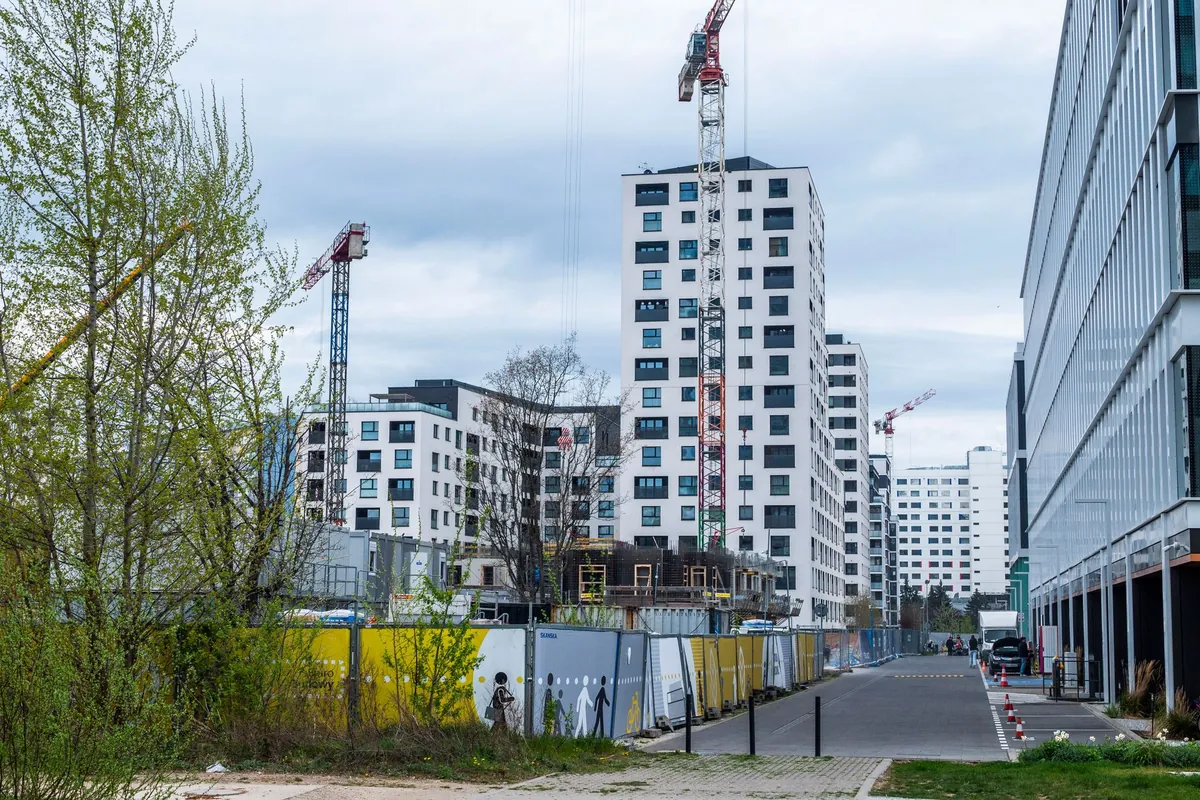
The render sells what does not yet exist,
the timeline gives the confidence
A developer sells homes that cannot yet be seen, so it lives on the render, on confidence in the timeline and on removing the fear of the price.
The render sells off-plan and creates urgency. New-build is bought before it exists, and the client decides on what they imagine. A quality render with the sales status — "3 left in this phase" — in the sales office makes tangible what is still a plot and adds the urgency that moves the undecided. Seeing the development selling pushes them to reserve before missing out.
The visible timeline is what gives confidence in new-build. The biggest fear of the off-plan buyer is the delay, and that fear stalls reservations. Showing the build timeline with the phases and estimated dates — start, structure, roof, completion — conveys that the developer delivers and is in control, which is exactly the confidence the buyer needs to sign for a home they cannot yet walk through.
The schemes and the finance remove the fear of the price. The price of a home is the barrier, and the buyer does not always know there are schemes or reliefs that bring the purchase closer. Showing the estimated mortgage, the available schemes and the stamp duty in the advice area turns a frightening figure into a payment and a purchase that looks possible, and brings forward the conversation that closes the reservation.
To be straight with you: we do not integrate with your sales CRM. The screen shows the renders, the status, the build timeline and the finance you upload, and you update them from your phone; lead and reservation management stays in your CRM. Digisini is the screen layer that sells off-plan and gives confidence in the timeline.
They will meet in the lobby
and compare what you told each of them
No other business puts its customers together to live in the same building for thirty years.
Whatever you tell one of them, all of them will know, with a name and a date. The completion date you gave in March, the kitchen finish one buyer got included and another did not, the storage unit promised in a corridor conversation. That does not surface in a formal complaint: it surfaces in the residents' group, in a tone where you are no longer part of the conversation. And a perfectly justifiable difference, retold by a third party, gets retold as a slight.
Which is why what the sales office says has to be the same for everyone and out in the open. What varies from unit to unit, what is included and what is an upgrade, which week the build is on. Not because the buyer has a right to audit you, but because anything only one person knows becomes a problem the day it gets out — and it will get out, because they are going to share a lift for decades.
And handover is not the end: it is the start of the long part. After it come the warranty years, the snagging, the residents' association forming, and your next development in the same city, which these people will either recommend or not. A developer who disappears on key day leaves its reputation to be written by the residents' group — the only place where the neighbourhood actually decides whether you can be trusted.
Straight with you: the screen does not negotiate upgrades or speed the build up. It is there so the status and the terms are written where everybody passes, instead of living in scattered conversations nobody later remembers the same way.
Common questions
from property developers
Your first screen,
up and running this afternoon.
First screen free forever. No card. No installers. 48 h offline.
Start free →14-day trial on paid plans, no card · Cancel anytime
Take the button via email
We'll send a 1-click link to create your account whenever you want. No password, no card, no commitment. Your first screen FREE forever.
No spam. Just the link — you decide when to come in.