The latte and today's toast,
on the counter screen
Your customer walks in, looks at the screen and orders. They see the single-origin Ethiopia, today's avocado toast and allergens without asking. Instead of a printed menu that expires every week, the screen above your counter shows what's on right now. You update it when the seasonal coffee runs out.
Free first screen forever · No card · Offline 48h
£2.80 · avocado toast £4.50 · single-origin Ethiopia
What you put on screen
from day one
Templates ready for speciality coffee shops and neighbourhood cafés with breakfast.
Speciality menu with prices and origin
The latte, cappuccino, seasonal single-origin Ethiopia, today's toast and pastries — each with its price. When the Colombian coffee or the cream-filled cornetto runs out, mark it from your phone and the screen updates in 2-3 seconds. No one asks for something you don't have.
Breakfast and afternoon slots by time
Morning breakfast combo of coffee + toast + juice for £4.50, afternoon pastries with coffee, and end-of-day discounts to reduce waste. The screen switches automatically at the times you set. You increase average spend and fill those quiet hours between services.
Allergens, coffee origin and bean shop
Allergen information visible (milk, gluten, nuts), speciality coffee origin with tasting notes and bagged beans to take away with a QR to buy. Coeliac customers find their option without asking, and coffee enthusiasts take the beans home. You meet allergen compliance without effort.
Loyalty, events and reviews
Digital stamp card (7th coffee free), coffee of the month with guided tasting, latte art workshops and your Google reviews. Build loyalty without an app, fill workshops in quiet hours and turn walk-ins into regulars.
The plan your coffee shop
actually needs
Small coffee shop with 1 screen above the counter: Starter €9/month. Coffee shop with counter screen + window display: Pro €19/month (3 screens, most popular). Coffee shop with multiple zones and outdoor seating: Business €59/month. Multi-site coffee chain: Network €199/month. All plans include 14-day trial without card.
No card · Cancel anytime · See all plans
Which screen
at each spot in the coffee shop
In a specialty coffee shop the menu alone is not enough: the coffee's origin justifies the price and the combos fill the flat hours.
Counter and bar
The menu with the latte, the cappuccino, the flat white and the time-of-day combos, with price. It is what the customer looks at while they wait for their coffee; that is where they order the extra pastry or move up from a filter to a specialty.
Window
The origin coffee of the month — the seasonal Ethiopia, its tasting note — to capture the passer-by and set you apart from the chain on the corner. The aroma pulls them in, but it is the screen that says the coffee here is the real thing.
Seating area
The afternoon pastries, the coffee of the month with a guided tasting, the latte-art workshop and the events. The seated customer learns there is a tasting on Thursday and comes back. The digital loyalty stamp — the 7th coffee free — goes here too.
Beans shelf
The coffee shop: beans for sale, the brew methods (V60, French press, Aeropress) and the grind. It turns the bar customer into a shop customer — the one who takes home the coffee they liked — without the barista having to sell.
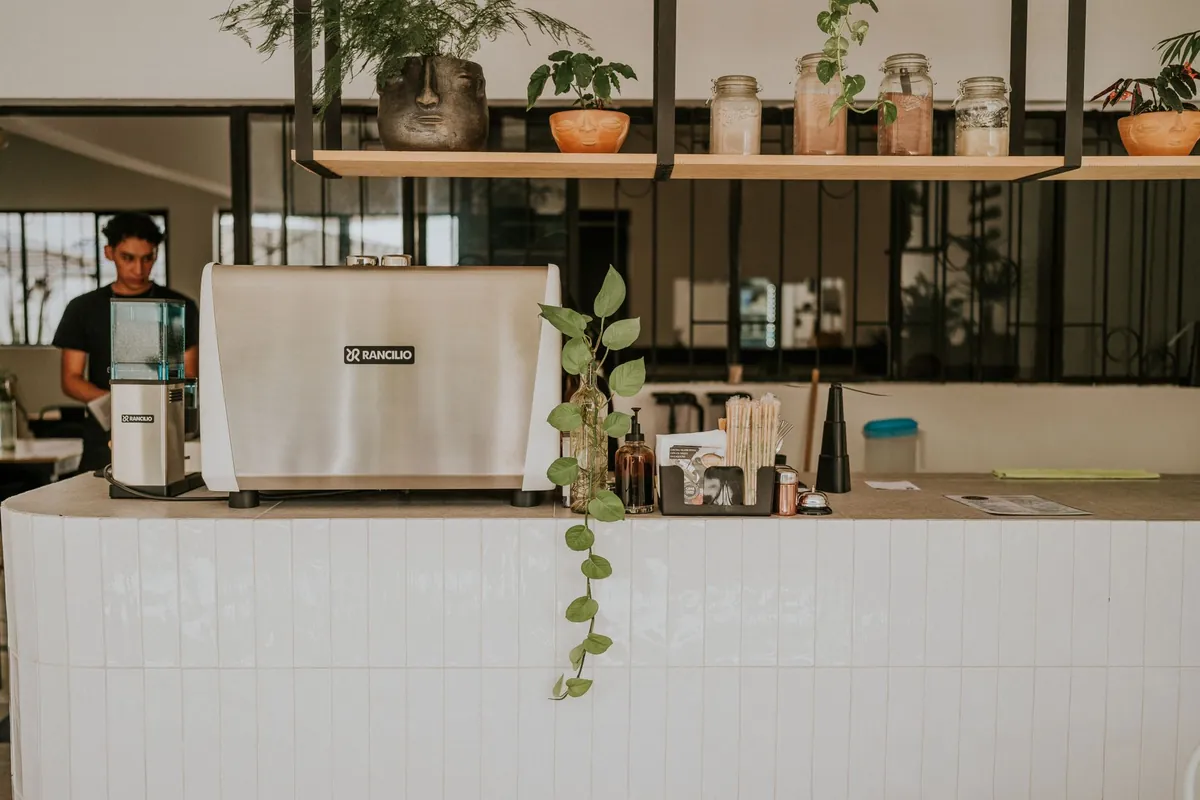
Specialty coffee
sells by telling its story
A specialty coffee shop does not compete with the chain on price: it competes on origin, loyalty and selling beans for home.
Origin justifies the price. A £2.80 flat white against the watery £1.20 from the machine is not explained by a label, it is explained by the washed Ethiopia, its red-fruit note and the week's roast. Telling that on screen turns "it's more expensive" into "it's better", and that is the whole game of specialty coffee.
Time-of-day combos fill the flat hours. The breakfast combo at 8, the afternoon treat at 5. Scheduled by the hour, the screen shows them on its own at the moment the customer decides whether to come in or walk on. The mid-afternoon slot, dead in many coffee shops, fills up with the afternoon combo well placed.
Loyalty and bean sales are your margin. The digital stamp card (the 7th coffee free) retains without plastic or rubber stamps, and the beans for sale turn the bar customer into a shop customer — the one who takes home the coffee they tried. Two revenue streams the chain next door does not contest.
To be straight with you: we are not an EPOS or ordering system. The screen is the menu, the window and the beans shop; the order and payment stay on your terminal. Digisini is the screen layer that tells your coffee and lifts the ticket.
Someone buys one coffee and stays until three
and whether that is a problem depends entirely on the hour, not on the person
A laptop at a table is expensive at nine and free at two. Most places treat it as a single question with a single answer — allowed or not, wifi password or no wifi password — when it is really a question about capacity at a particular time of day. The same behaviour is a cost in one hour and a benefit in another.
Three ways places handle it that actually work:
- Different rules at different hours, said plainly. Tables reserved for eating at lunchtime, open the rest of the day. It is easy to accept and impossible to argue with when it is written rather than enforced case by case.
- A layout that separates the two. A counter or a window bar for short stays and a back area for long ones. This does more than any rule, and it costs a rearrangement rather than a conversation.
- Or leaning into it outside the peak. A quiet afternoon with six people working looks occupied, and looking occupied brings people in. An empty room repels.
The reason the argument never settles is that both sides are right at different times: in the peak, a table is your scarcest asset; outside it, an empty table is worth nothing at all. Any policy that ignores the clock will feel unfair in one direction or wasteful in the other.
There is also a quieter benefit that rarely gets counted: long stayers are regulars. They come several times a week, they know the staff, and they spend more per week than the person who visits twice a month, even if they spend less per visit. The measurement that makes them look expensive is the wrong one.
Work out your takings per seat in the busiest hour and in the quietest. If the second number is close to zero, the long-stay question only exists for two hours a day and should be treated that way.
Common questions from
coffee shop owners
Your first screen,
live this afternoon.
Free first screen forever. No credit card. No installer. Offline 48h.
Start free →14-day trial on paid plans, no card · Cancel anytime
Take the button via email
We'll send a 1-click link to create your account whenever you want. No password, no card, no commitment. Your first screen FREE forever.
No spam. Just the link — you decide when to come in.