Your hotel lobby,
on screen
The receptionist at The Marina Boutique updates the wine tasting time on screen from her phone while checking in the German guest. Your lobby shows breakfast-spa-checkout, hotel wifi and the 7:30pm activity — in 6 languages that rotate automatically, without printing flyers or sticking posters on doors.
Free first screen forever · No credit card · Multi-language auto
7:00am - 10:30am · Mediterranean Hall
What goes on screen
from day one
Templates ready for boutique hotel, rural inn, urban B&B and vacation rental. Multi-language auto EN/ES/FR/DE/IT/PT.
Service hours + wifi
BREAKFAST 7:00-10:30 · SPA 10:00-22:00 · CHECK-OUT 12:00 · GYM 24h. Hotel WiFi network and password visible. The guest doesn't have to ask at reception.
Daily events + activities
Wine tasting 7:30pm, live music in lobby 9pm, yoga on terrace 8am. Facility map (floor 1: spa · -1: parking). The receptionist changes times from her phone whenever there's a variation.
Multi-language welcome
Greet groups by name ("Welcome ACME Conference"). Playlists rotate automatically EN → ES → FR → DE → IT → PT. The German guest sees spa hours in German when their slide rotates, without asking the concierge.
Local tourist info
Airport transfer, suggested tours, Sunday market, local festivals (Notting Hill Carnival, St Patrick's Day, Edinburgh Fringe). Lobby screen as 24h digital concierge. Improves guest experience and cuts reception queries by up to 40%.
The plan your hotel
actually needs
Hostel or B&B with 1 reception screen: Starter €9/month. Boutique hotel with reception + restaurant + spa: Pro €19/month (3 screens, most popular). Mid-size hotel with 5-10 zones (reception + restaurant + spa + gym + bar + common areas): Business €59/month. Hotel chain multi-property: Network €199/month. All plans include 14-day trial without card.
No card · Cancel anytime · See all plans
Where the screen goes
in the hotel
A hotel's lobby informs, sells internal services and gives image. Spreading the screen by area offloads reception and lifts the spend per guest.
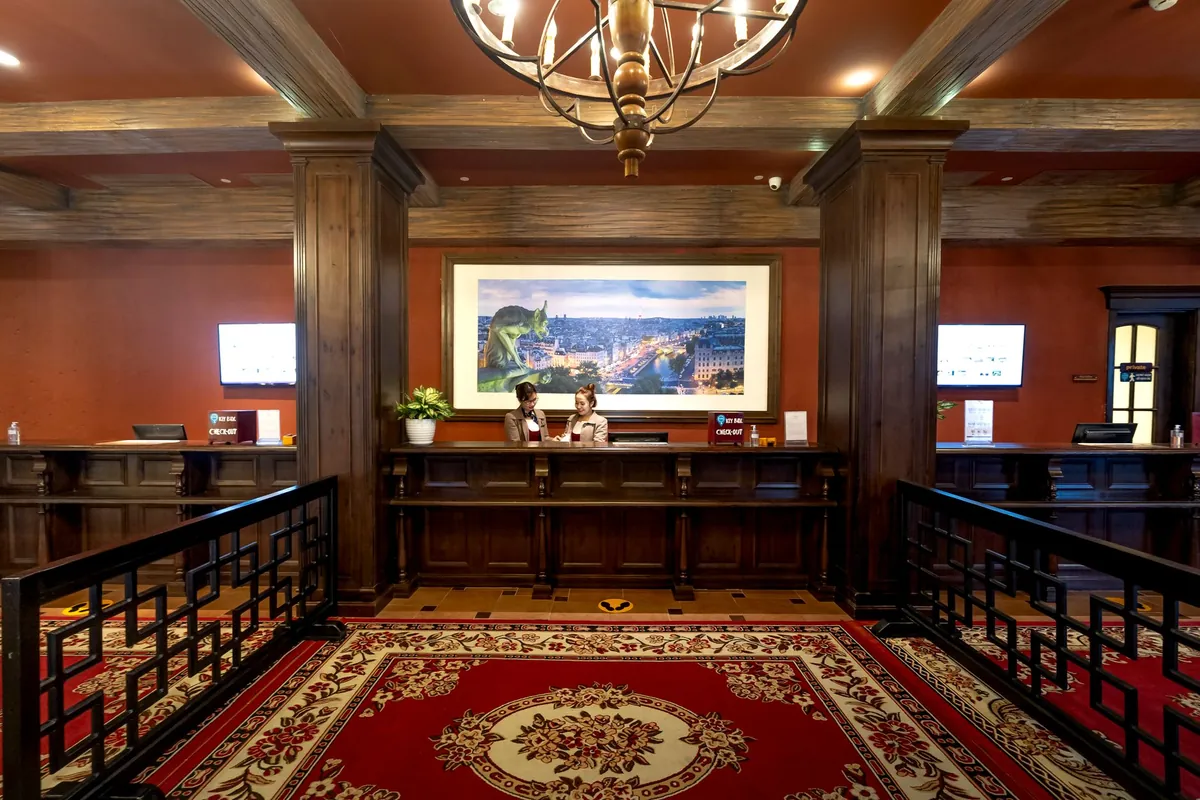
Lobby
The service times (BREAKFAST 7:00–10:30 · SPA 10:00–22:00 · CHECK-OUT 12:00 · GYM 24h), the wifi and the day's events. It is the screen that answers what every guest asks, without going to reception.
Reception
The welcome to groups and conferences by name ("Welcome, Acme Conference"), in several languages. That detail gives the image of a hotel that looks after the guest from the first minute, and personalises weddings, corporate stays and events.
Restaurant, spa and common areas
The 7:30pm wine tasting, the live music in the lobby, the yoga on the terrace. Internal services get used more when the guest knows they exist and at what time; that is the extra spend of each stay.
Guest rooms
Optional: a welcome channel with the hotel's services, room service, the local information and check-out. The guest sorts out questions from the room without calling reception.
Offload reception,
and lift the spend per guest
A hotel improves the experience and the revenue when the guest knows what is on and when. The screen informs, sells the internal services and gives image.
Internal services get used if they are seen. The spa, the restaurant, the wine tasting, the activities: they are the extra spend that lifts revenue per stay, and the guest uses them when they know they exist and at what time. A lobby screen advertising them fills the afternoon spa and the restaurant tables with people you already have in, with no intermediary commission.
The group welcome personalises and retains. Receiving a conference, a wedding or a group by name on the lobby screen gives the image of a hotel that looks after the detail, and those are exactly the clients who return and recommend. It is a personalisation that takes a minute to set up and that the event organiser comments on to their attendees.
Offload reception at peak times. Breakfast times, wifi, the check-out time: the questions that overwhelm reception on arrival and departure. On screen, in several languages, they answer themselves and staff handle what really needs human contact. The guest, too, finds the information when they need it without queuing.
To be straight with you: we do not manage bookings, the PMS or room service. You carry on with your system; Digisini is the hotel's screen layer — services, events, welcome, local info — which informs and sells what you already offer, not a booking engine.
Nobody disputes the room rate
they dispute the four lines underneath it
Breakfast, parking, the late checkout, the bottle that was on the desk. Each one is legitimate, each one was mentioned somewhere, and together they are the reason a guest who enjoyed their stay leaves annoyed. The rules on how prices are presented have been tightening precisely because of this — but the practical problem is older and simpler: the guest decided what the stay would cost on the day they booked, and nothing has updated that figure since.
The fix is not a longer terms page: it is putting the same four lines where the decision is actually made. On the way in, at the lift, on the room screen — what is included, what is chargeable and how much. A guest who reads that breakfast is twenty pounds either books it or does not, and in both cases the bill matches what they expected. The one who finds out at seven in the morning, in a dining room, with a family waiting, is going to write about it.
And it is worth noticing which of those extras actually sell better when they are stated plainly. Late checkout is the clearest: most people would happily pay for it and never ask, because asking feels like requesting a favour they might be refused. Written up with a price and a cut-off time, it becomes a product rather than a negotiation — and it is the highest-margin thing most hotels sell without any cost attached.
The second thing this trade under-publishes is accessibility, and the reason is that it feels risky to be specific. So hotels say «accessible rooms available» and stop, which is useless: the person who needs to know wants the door width, the shower type, whether there is a step at the entrance, whether the lift reaches the restaurant. Being concrete cannot be held against you if it is accurate, and it converts a booking that would otherwise go elsewhere out of pure uncertainty.
All of it belongs on the wall rather than in the confirmation email, for the same reason as everywhere in this catalogue. The email was read three weeks ago on a phone, on a train, by one person out of the two who are arriving. The wall reaches both of them, at the moment they are deciding whether to have breakfast here or find a café — which is the entire commercial question of a hotel morning.
To be straight with you: we display what you upload and we do not handle rates or bookings. How prices must be presented, and what has to be included in a headline figure, is a matter for your own advisers — the point here is only that the argument at checkout is never about the room, and that the four lines that prevent it are already known to you.
Common questions from
hotel managers
Your first screen,
live this afternoon.
Free first screen forever. No credit card. No installer. Multi-language auto.
Start free →14-day trial on paid plans, no card · Cancel anytime
Take the button via email
We'll send a 1-click link to create your account whenever you want. No password, no card, no commitment. Your first screen FREE forever.
No spam. Just the link — you decide when to come in.